



Religious Sites
Independence history includes several religious landmarks that form compelling chapters in the city’s legacy.

Perched at the start of the Oregon, California and Santa Fe trails, Independence welcomed thousands of travelers — including those seeking religious freedom. A number of significant religious sites are among the city’s historic landmarks that tell a compelling story about the city’s growth. Notable sites include:
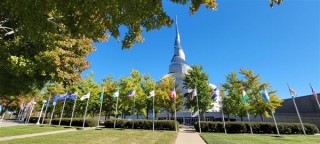
Community of Christ International Headquarters — You can’t miss the shining spiral that forms the eye-catching peak of this multipurpose space. Inside the Temple, the Worshiper’s Path encourages quiet reflection amid symbolic artwork. The adjacent Auditorium is home to one of the largest freestanding organs in the U.S.
St. Paul African Methodist Episcopal (AME) Church — Independence resident Hiram Young, a free Black man, had a significant impact on the city, including the construction of St. Paul AME in 1865. The church was officially organized on April 17, 1886, and remains in operation today.
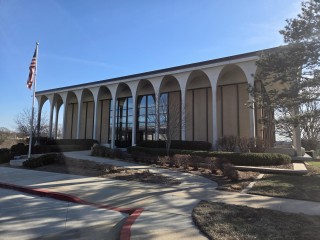
The Church of Jesus Christ of Latter-Day Saints Independence Visitor’s Center — A large number of Mormon faithful headed to Independence after the religion’s founder, Joseph Smith, declared the city as Zion in 1831. The new arrivals faced a turbulent reception throughout Independence and were eventually driven from the city in 1833.
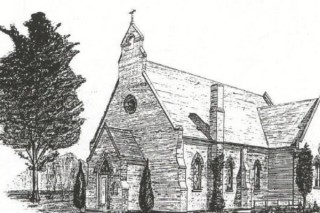
Two churches played instrumental roles in the lives of Harry S. Truman and his wife, Bess Wallace. Young Truman attended Sunday School at First Presbyterian Church, where he first met Bess. Years later, the two were married at Bess’s home church — Trinity Episcopal Church of Independence — the oldest Episcopal church in Jackson County. (Note: Trinity Episcopal Church is not open to the public).
Loading results...
No results were found.
None of the results have location data.
Only out of map points have location data.
To view the distance from a specific location, turn on the "Near Me" filter, then click and drag the blue point on the map.